Gaming audio is easy to merchandise visually. RGB lighting, angular enclosures and dramatic desk scenes can make a listing look like it belongs in the category.
But the strongest online offer is not the product with the most gaming cues. It is the product whose role, setup and evidence are clear enough to survive the distance between an image and the real desk.
For an online seller, the product decision should begin with the complete user setup.
What Kind of Gaming-Audio Product Is It?
“Gaming audio” can describe several different architectures:
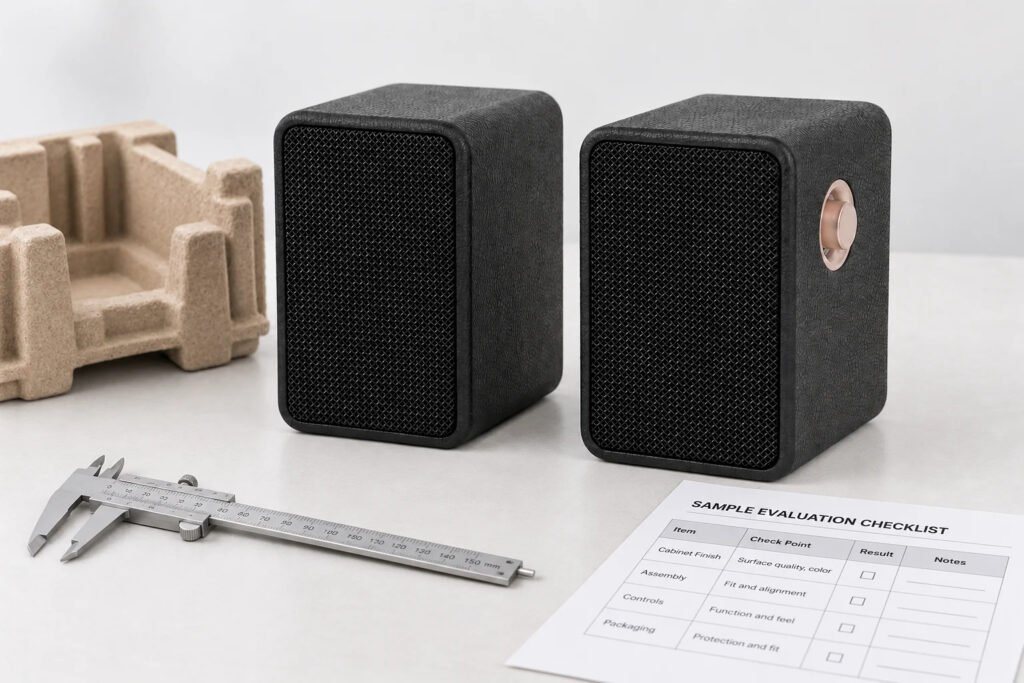
- a compact stereo speaker pair
- a single desktop soundbar
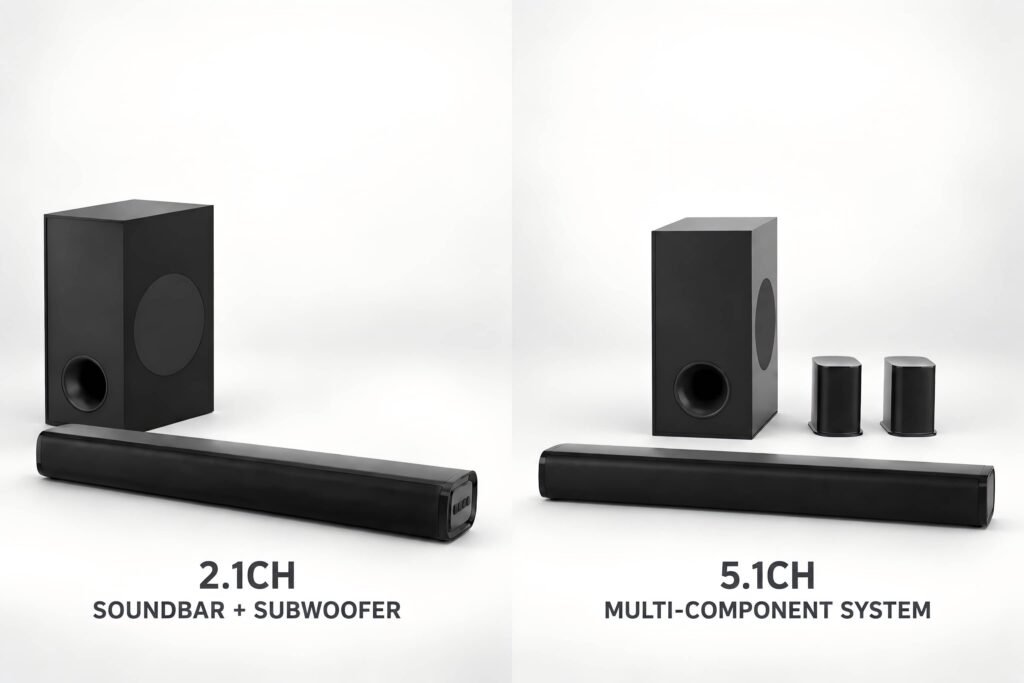
- a 2.1 soundbar with an integrated or separate low-frequency section
- a larger speaker pair with desktop controls
- a headset-oriented accessory rather than a room speaker
- a multi-source product shared between gaming, music and video
Each format occupies the desk differently and creates different listing questions.
A soundbar may fit under a monitor and reduce the number of visible components. A speaker pair may support left/right placement but requires more desk width and cable planning. A separate subwoofer changes the floor or desk setup.
These are product-role differences, not styling details.
Start From the Desk and Source Devices
The intended setup should be drawn before the specification is finalized.
Ask:
- Is the source a PC, monitor, console, television or mobile device?
- Which audio outputs are actually available?
- Where will the product sit relative to the screen and user?
- How much desk space is realistic?
- Is the system powered from the wall, USB or another source?
- Does the user need quick access to volume, mode or headphone controls?
- Are cables visible in the main product images?
These questions help determine the appropriate form, inputs and control layout.
Do not assume universal console, television or computer compatibility. The exact connection path must be verified on the proposed version and described accurately in the listing.
Visual Identity Should Support Product Identity
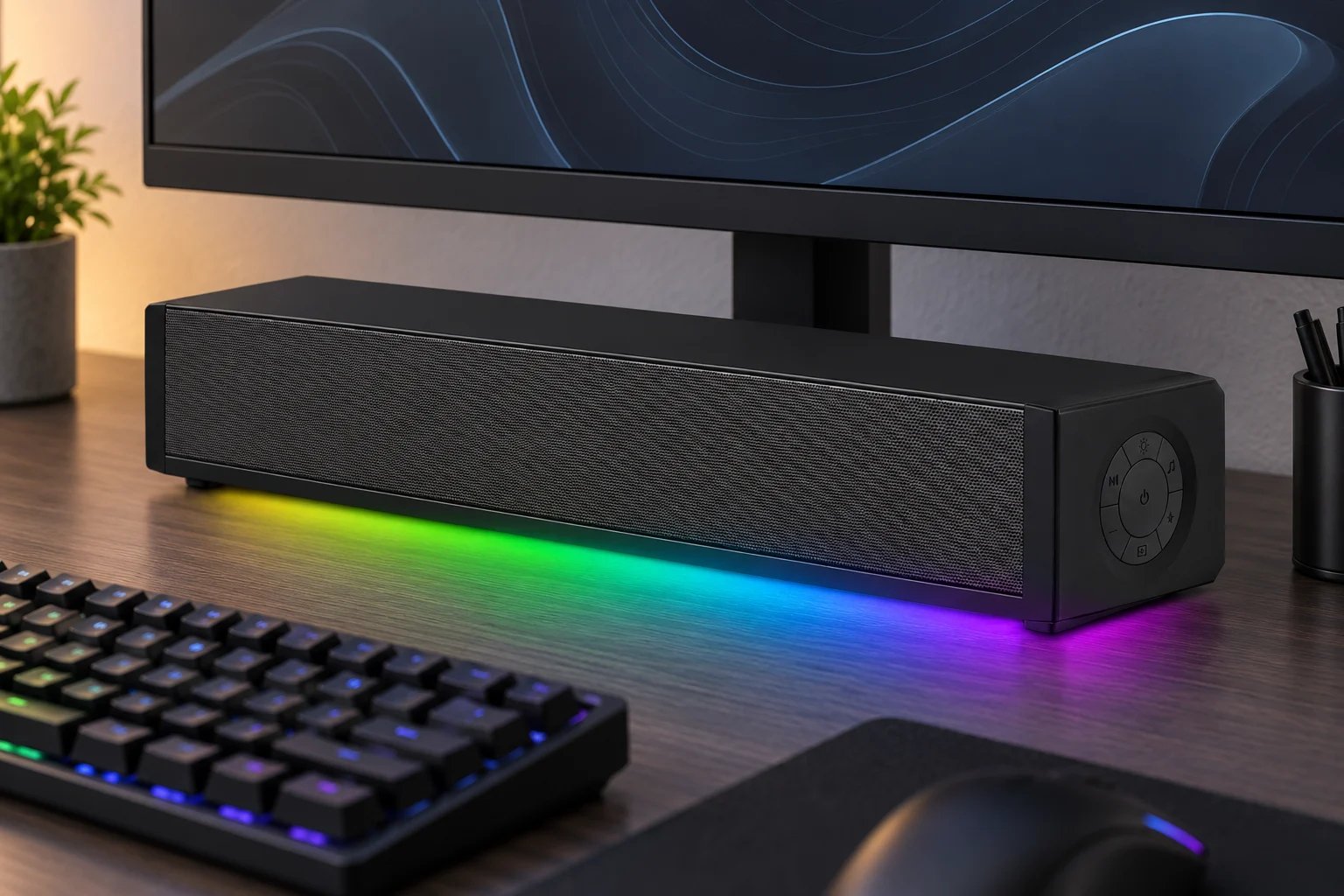
RGB lighting can help a product fit a gaming environment, but it should not carry the entire proposition.
The seller should confirm:
- where the light is located
- whether it is visible in normal placement
- how it is controlled
- whether the product image represents the real effect
- whether lighting behavior is consistent with the final version
The listing should show the product both with and without dramatic environmental lighting.
Buyers need to see the actual enclosure, grille, controls and proportions.
If the product is difficult to recognize outside a neon scene, the visual treatment may be stronger than the product story.
The Control Layout Must Be Visible
Online shoppers cannot handle the product before purchase.
The listing should therefore make the main controls easy to locate visually.
Show:
- power and volume controls
- input or mode switching
- lighting control where relevant
- headphone or microphone connections if present and verified
- remote control if included
- the relationship between the controls and the intended desk placement
This is not a claim that every user will find the product intuitive.
It is evidence that the primary control structure is visible and can be explained.
Sound Claims Need More Than Gaming Language
Words such as immersive, tactical, powerful and crystal-clear are common in gaming-audio listings.
They can easily exceed the evidence.
A credible product page should separate:
- verified architecture
- measured specifications and their basis
- intended tuning direction
- actual test results
- supported inputs and modes
- marketing language that still requires proof
More low-frequency energy is not the whole job.
If the product is intended for gaming, the development team may also need to consider how low-frequency impact works with the cues and detail that matter in the experience.
That is a tuning objective, not an automatic outcome of adding a larger driver or subwoofer.
Do not claim a precise latency result, surround behavior or positional advantage without product-level measurement and a defined test method.
A Product Listing Should Answer Setup Questions
The image set and description should answer, without forcing the shopper to guess:
- What is included?
- How large is each component?
- Where does it sit?
- How is it powered?
- Which verified sources connect?
- Where are the controls?
- What cables and accessories are included?
- What lighting is real and controllable?
- Which claims are supported by evidence?
This information also reduces avoidable customer-service conversations and returns caused by setup misunderstanding.
Review the Product-Image Evidence
Gaming renders can be useful for explaining intended placement, but they should not replace real product evidence.
A strong listing package may include:
- clean front and three-quarter product views
- a real desk-placement image
- rear or side connection views
- a control close-up
- dimensions in context
- included accessories
- lighting shown accurately
- packaging or carton information where relevant to the channel
The product should remain the same across every image.
Buttons, ports, grille details and proportions should not change between renders and photography.
Choose a Product That the Channel Can Explain
An online seller may be tempted to select the product with the longest feature list because each feature creates another bullet point.
That can produce a listing with no clear hierarchy.
A stronger offer leads with one product role—for example, a compact under-monitor gaming soundbar, a desktop stereo pair or a 2.1 system for a larger setup.
Connections, lighting and controls then support that role.
The shopper should be able to understand the product before reading the entire specification table.
Supplier Questions Before Listing
Before approving a gaming-audio product, ask the manufacturer:
- Which source devices and connection paths have been verified?
- What is the exact product and firmware version?
- Which lighting modes and controls are confirmed?
- What is included in the carton?
- Which sound claims have test evidence?
- Are any latency figures available with a defined method?
- What dimensions, weights and packaging data are approved?
- Which compliance documents apply to the destination market?
- Which product details can be customized without changing the validated version?
The answers should be reflected in the listing assets and not kept only in a quotation file.
A Practical Selection Rule
For online selling, select the product that can communicate a clear gaming or desktop role with accurate visual evidence and a verified setup path.
Gaming styling can attract attention. Product clarity earns trust after the click.
FAQ
Is RGB Lighting Enough to Make a Product “Gaming Audio”?
No.
Lighting may support the visual context, but the product still needs an appropriate form, source path, control structure and verified performance for its intended role.
Should Gaming Speakers Claim Low Latency?
Only when the exact product has evidence from a defined test method.
Do not use a precise latency number from a chipset or source file as if it proves the complete system.
What Images Are Most Important for an Online Gaming-Audio Listing?
Use clean product views, real desk placement, controls, connections, dimensions and included accessories.
Styled gaming scenes should support—not replace—product evidence.
Is a Soundbar or Speaker Pair Better for Gaming?
Neither is universally better.
Choose based on desk space, intended placement, source devices, stereo layout, controls and the product role the channel can explain.
Building a gaming-audio offer for e-commerce? ARVICKA Sound can help review the desk setup, product architecture, listing evidence and OEM / ODM / Private Label scope before the product goes live.